

Horse Riding at Guincho Beach, Cascais
Guincho is one of Portugal’s most dramatic coastlines — a wide Atlantic beach flanked by dunes, pine trees and the rugged hills of the Sintra Natural Park. Most visitors arrive by car, walk to the water’s edge and leave. The people on horseback get something different: an hour moving through the dunes with the ocean on one side and the Serra de Sintra on the other, at a pace that actually lets you take it in. This is one of the most distinctive horse riding experiences near Lisbon, and it’s thirty-five minutes from the city centre.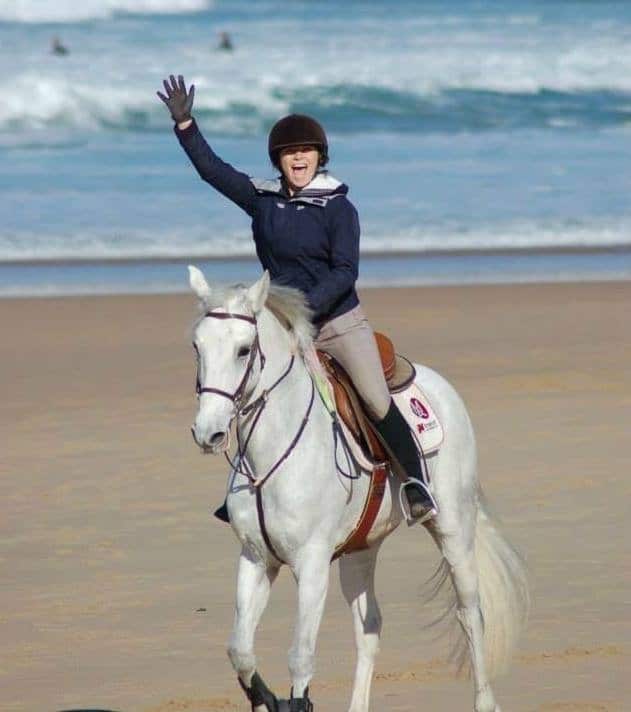
The Guincho trail — what the ride looks like
The trail departs from Quinta da Marinha, our equestrian centre in Cascais, and heads west through pine forest before opening out onto the Guincho dune system. From there, the route follows the coastal path with views across the Atlantic towards the Cape Roca headland — the westernmost point of continental Europe. The terrain is a mix of sandy tracks, compacted dune paths and light woodland. It’s varied enough to be interesting without being technically demanding. Horses walk the route at a relaxed pace, giving riders time to look around rather than concentrate on staying on. For groups with experience, there are sections where trotting is possible on request. Groups are capped at 6 riders per guide. That’s a deliberate choice — large groups change the atmosphere of a ride, and the Guincho trail is better experienced as something intimate rather than a queue on horseback.How long is the ride and what’s included
We offer two versions of the Guincho trail:- Standard Trail (approx. 1 hour) — the classic route through the dunes to the coast and back. Ideal for first-timers and families. Included: horse, riding helmet, safety guide throughout and accident insurance.
- Extended Coastal Route (approx. 1.5 hours) — the full trail plus an extension along the coastal path, returning through a different section of pinewood. Recommended for riders with some previous experience.
Is it suitable for beginners?
Yes — and this is worth being clear about, because Guincho can look intimidating from the outside. The beach is exposed, the wind can be strong and the dunes feel wild. But the horses used on this trail are calm, experienced animals that have done the route hundreds of times. They don’t spook at waves. They don’t rush. They walk steadily and respond well to light guidance. Before the ride, a guide runs through the basics with anyone who hasn’t ridden before: how to sit, how to steer, how to stop. It takes ten minutes. Most first-timers feel comfortable within the first quarter of an hour on the trail. Children are welcome from age 8, accompanied by an adult. The weight limit for all trail rides is 100 kg.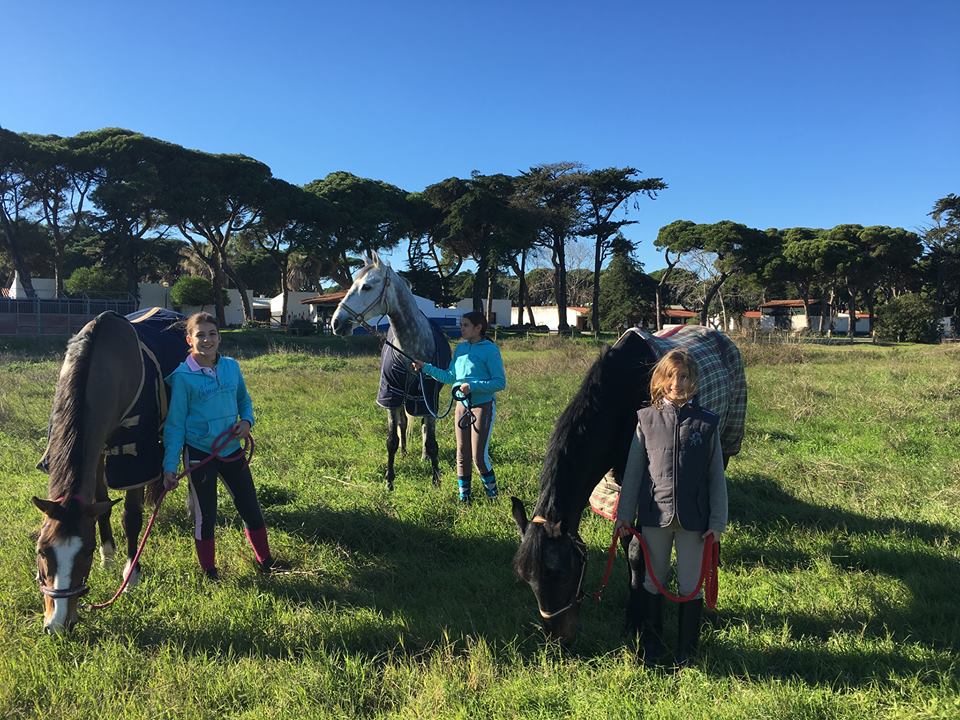
How to get to Guincho from Lisbon
The quinta is in Cascais, not at Guincho beach itself — the trail rides out from there. Getting here from Lisbon is straightforward:- By car: Take the A5 motorway towards Cascais, then follow signs for Quinta da Marinha. Journey time from central Lisbon: around 35 minutes. Free parking on site.
- By train + taxi: Cascais line from Cais do Sodré station to Cascais (40 minutes, runs every 20 minutes). From Cascais station, a taxi or Uber to Quinta da Marinha takes about 10 minutes.
- From Sintra: 20 minutes by car along the EN247 coastal road — one of the most scenic drives in Portugal, as a bonus.
Frequently asked questions
- Can beginners do the Guincho trail?
- Yes. It’s one of our most popular rides for first-timers. The terrain is flat, the horses are calm and experienced, and a guide accompanies the group throughout.
- How long is the ride?
- The standard trail takes approximately 1 hour. The extended coastal route runs about 1.5 hours. Both depart from Quinta da Marinha in Cascais.
- How do I get to Guincho from Lisbon?
- 35 minutes by car via the A5. Or train from Cais do Sodré to Cascais (40 min) then a short taxi to the quinta.
- Does the ride operate year-round?
- Yes. The Guincho trails run throughout the year. In summer, morning departures are recommended to avoid the midday heat.